






Sounds And Songs: How Music Calms The Best Players
 Story by:
Music Blog
Story by:
Music Blog
In the noise and blinking lights, the correct sounds and songs give the effect of control that creates a sharp focus. Music is a silent ritual that keeps the best players on track even during a noisy game.
The Quiet Ritual Behind A Loud Game
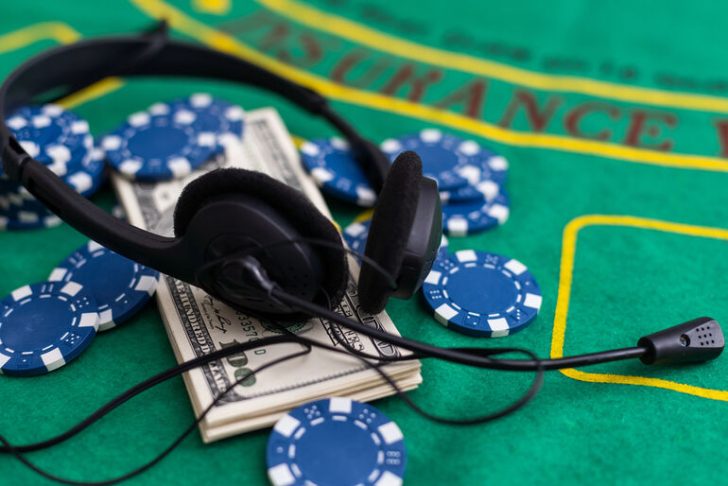
I do not know how many times we have all sat and watched a poker game on the television, the internet, or in a casino and realized that there is something conspicuous about the leading tables. The finest players are there calmly, composed, and concentrating on the game before them time and again. It all becomes background noise, the pressure, the sometimes trash talk, it all turns out to be forgotten. They pretend as though there is no other thing. And there is one little detail that seems to keep reappearing: the headphones. No coincidence that.
To a large number of players, music has also become a ritual, not merely a time-killer. It establishes the atmosphere even before the hand is dealt and assists in establishing the mental plane where distractions are no longer so tangible. An aptly selected song can make breathing slow and steady, focus attention, and relax the tension that always develops in stressful situations. Poker can appear as an emotional roller coaster on the outside. There is always a struggle of trying to remain calm within the mind of a player in order to avoid being frustrated or excited.
It is here that music silently goes to work. It is the buffer of the anarchy of the surrounding environment, and also the guide towards the inner rhythm, making thoughts measured, reactions controlled, and decisions deliberate. Music, in that case, is not a table music. It is integrated into the strategy, it serves as a personal soundtrack, and makes the players grounded, focused, and in control when it counts the most.
Why Have Headphones Become Part Of Poker Culture?
There is a practical side to it, of course. Headphones create a small private world. In a live setting, they soften table talk, chips, and the constant hum of the room. In a digital setting, they separate the player from whatever else is happening in the house, apartment, or café. But the deeper reason is rhythm. Good players are constantly trying to keep their decisions at the same emotional temperature. They do not want one bad beat to speed them up or one lucky hand to make them sloppy. Music can act like a metronome for that mindset.
It gives the brain something familiar to hold onto while everything else changes hand by hand. That is not unique to poker, either. Music fans already move fluidly between live experiences and other forms of digital entertainment in their downtime, which makes the crossover feel natural. Live Music Blog has written about how audiences increasingly carry music culture into other digital spaces between festivals and shows, rather than treating listening as something confined to the stage.
Not All Music Works The Same Way.
Inquire ten players what they listen to, and you are likely to have ten totally different answers. Others relax to the background noises with no lyrics whatsoever. Some of them like beats, instrumentals, hip-hop, light electronic overlay, or even a bit of jazz. Players who bend their ears towards the deeper sounds are not uncommon–provided that it is the rhythm that seems to be steady and familiar and not unpredictable. It is an indicator of a lot about the use of music.
The point is not to entertain at the table; it is to control. The best “poker playlists” would be those that are located in the background and influence focus, without distracting attention. The sound is rather an undercurrent, and it is used to stabilize mood rather than to disrupt it. This concept is not specific to poker. In the music space, listeners are more and more making use of playlists as instruments of particular moods- deep concentration, flow of creativity, or pressure. This change is reflected in research done on music and cognitive performance.
The outcomes are different with each individual, but there is one trend that cannot be ignored: individuals select music actively to facilitate challenging mental activities. It is not so much what is popular but what works at the given time. Poker itself is naturally rhythmic. The repetition of the game is in harmony with the steady beats, but each hand has sufficient intensity to keep the full attention. In such a balance, music is more than just a preference; it becomes a performance aid to keep the players in tune as the noise in their surroundings recedes into the background.
Music As A Way To Avoid Tilt
The real value of music in poker is not that it makes anyone smarter. It is that it helps them stay calmer. Tilt is one of the most common reasons people play worse than they know how to play. A bad call, a bluff that gets picked off, a brutal river card, and suddenly the next few hands are shaped by irritation rather than logic. Music cannot stop bad beats, but it can help keep a player from reacting too emotionally to them.
That is where sound becomes more than background. It becomes a regulation. The playlist says, in effect, “stay here, stay level, keep moving.” For some players, that means soft focus music. For others, it means tracks with a steady groove that hold attention without pulling it around. It is not so different from what runners, writers, and coders do. They find a sound that keeps them in their lane.
The Rise Of Poker Playlists
What makes this especially interesting is that poker music is no longer just a personal quirk. It is a real niche. There are playlists, YouTube channels, and long looping mixes built specifically for poker sessions, concentration, and emotional control. That says a lot. It means players are not only listening to music while they play. They are actively curating the sound of the experience.
That feels very current. We live in a world where people customize everything: their desk setup, their screen brightness, their keyboard, their lighting, their work playlists, their gym playlists, even their walking playlists. It makes sense that online poker would become part of that same behavior. Once the game moved onto laptops and phones, players gained more control over the atmosphere around it. Headphones became part of the setup, not an accessory. And once that happened, music stopped being just decoration. It became part of the performance.
A Digital Game With A Human Soundtrack
The thing about poker is that it might seem like it is so cold and calculated on paper. It is generally discussed about math, strategy, hand ranges, position, bankroll management, discipline, and statistics. All that is a necessity. But there is another dimension that does not always receive the same concern, the emotional dimension of the game. The fact that, however technical poker may be, all decisions have to pass a human mind. It is influenced by mood, energy, and the environment at that particular instance. Players are not in machines,s and the most successful players know this very well. They not only learn hands and probabilities, but also prepare their attitude as well.
This preparation looks familiar from a music perspective. As much as one makes a playlist to be focused, on a long drive, late in the night, players create a sound environment that enhances the manner in which they prefer to think and feel. It is not an accidental decision but one that is planned. The use of tempo, texture, and repetition contributes to the development of a continuous mind pace. That is where the music is not background. It is a silent structure that keeps the players in focus as everything changes around them.
Regular rhythm will be able to even out emotional peaks, so it will be easier to make every choice in a rational manner, rather than in a way that is influenced by emotions. In that regard, the association of poker with music is less shocking and more predetermined. One requires doing things in the face of pressure, and the other assists in creating the attitude that enables such control to happen. One need not have much to do to get in the right mood; sometimes it is as simple as the right track at the right time, in the right mood, before the first hand is thrown.
Where Focus Meets Sound
Music and poker are not entirely gambling. It has to do with calmness. It is about the little, individual systems that people create in order to remain alert in a crisis. Others are based on silence. Others are bent towards routine. A large number of them resort to sound. When applied to music, such a decision is not merely about preference. It demonstrates the way humans utilize sound to create a mental room- choosing particular sounds, beats,s or well-known songs to remain stable when the temperature increases. It is not about listening in order to enjoy but to build a secure condition of mind. To players who bring music to the game, the soundtrack is not detached from the experience. It is incorporated into their attention, a silent stratum which facilitates clarity and control. During such times, there is no competition between the songs and the game; the songs are aiding in holding everything together, one choice at a time.




Comments 0
No Readers' Pick yet.