





The Science of the Encore: Using Color & Movement to Keep Crowds Hooked Till the Last Note
 Story by:
Music Blog
Story by:
Music Blog
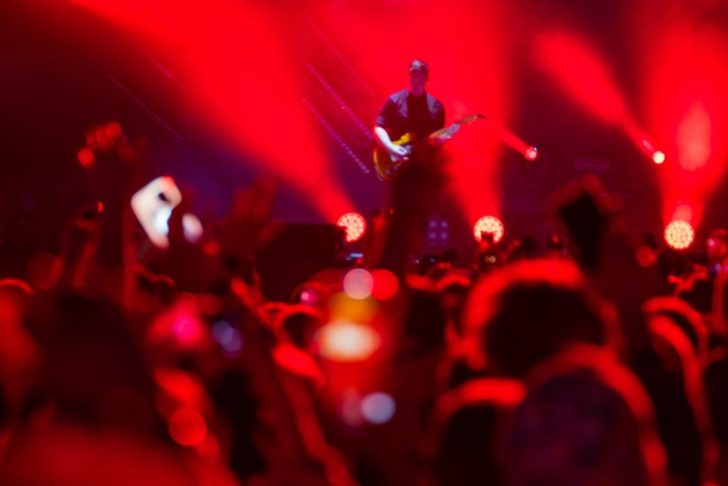
A packed room. House lights drop. You and your band play the first encore chord, and then the room goes boom. The music adds to the scene, as do the wash of amber beams that have everything to do with the live performance except being live, adding depth, intensity, and emotion. Concert lighting is a vital aspect of the contemporary music experience today and plays a part in how audiences experience vibrancy, rhythm, and movement during a concert.
But that gut-wrenching effect isn’t by chance – it’s all about the timing of the lighting, and how well it can convey the same level of excitement as a surprise key change or a killer drop. This guide breaks down recent studies in lighting psychology down to practical tips and tricks for any band, DJ, or small-festival crew with or without a degree in colour theory or an arena-sized budget.
Why Lighting Drives Audience Energy
A sudden lighting change would make sense in terms of triggering an orienting response, which would include activation of the locus coeruleus noradrenergic arousal system, the classic cardiac marker of the orienting response, a transient deceleration in heart rate (increase in sympathetic activity markers, such as pupil dilation, and increased skin conductance). This is a separate mechanism, the pupillary light reflex (a parasympathetic response), which results in the pupils’ reflex constriction in response to the increased brightness.
That last spike of excitement can set the stage for the emotional excitement that you desire from your audience. In Portugal, cooler coloured stage lighting was associated with an increased incidence of glare for festival attendees. Translation: Color temp isn’t about looking pretty, go too far into the blue, and folks will squint at your show. When reaching for connection, think warm colors; when reaching for tension, think cool colors.
Color Theory on Stage
Colour in theatre is very important to help create mood and energy. Various colours may affect the intensity, emotion, and atmosphere in a performance. Color transitions are used effectively to draw attention and enhance the live experience.
Warm vs. Cool Palettes
In visual psychology, reds trigger feelings of intimacy and excitement; ambers evoke warmth and coziness; blues and violets tilt toward mystery or melancholy. That maps neatly onto most set lists: upbeat pop encore? Lean warm. Downtempo techno closer? Ice it with cool whites. Happy songs were rated most positively under warm-white LEDs, while the same music scored lowest under blue light. Conversely, sad music received the lowest ratings under red lighting.
Dynamic Color Shifts
Static washes can feel flat over time. Rather, program pines and shadows for the story of the music; subtly pastel hues for a verse; a vivid chorus, a haze at the breakdown. Movement maintains the eye’s receptors in an “on” state and keeps the eyes focused on the crowd even after the ears have adapted.
Intensity, Angles & Movement
Brightness (illuminance) and beam angle change how color is felt. A wide-beam PAR wash can appear diffuse and muddy on stage; swapping to a narrow-spot lamp (~12°–15°) — or using a zoom-capable LED PAR at its tightest setting- concentrates the output into a defined shaft that reads clearly even through theatrical haze. In a simulated museum/cultural exhibition hall environment, 300 lx / 4 000 K was recommended as a balanced condition for computer-based learning environments based on EEG attention measurements and subjective comfort responses, but it is not described as high-illuminance, and does not simultaneously maximize both attention and comfort.
Practical takeaways:
- For normal theatrical acting surfaces, the lighting level required ranges between 50-100 footcandles (540-1080 lux); For the specific facial key light, 50-100 FC (540-1080 lux) may be used for drama purposes, whereas 1000-2000 lux may apply to broadcast/IMAG.
- Moving heads with narrow beams can be used for accent lighting; The speed at which they pan and tilt sells drama more than the sheer.
- Program exponential dimmer curves for halogen-style fades, even on LEDs, to avoid that tell-tale “snap” blackout.
Programming the Encore Sequence
The encore numbers are sometimes the most powerful of the performance. Gentle lighting changes can maintain a sense of movement, create anticipation, and keep the audience fully engaged. Appropriate visual cues can make the final songs a memorable experience.
Building Anticipation
- Reset the palette: Minutes before the encore, wash the stage in a single low-saturation hue.
- Introduce motion slowly: Initiate a chase that ramps pan/tilt speed gradually.
- Silence + blackout: When the final pre-encore note rings, drop all fixtures to 0% for one heartbeat longer than feels comfortable.
Release & Finale
Now earn that blackout. Hit with multi-angle blinders focused just over heads, not into eyes, to avoid glare complaints. Consider using short breaks of strobe in the song’s downbeats during high-energy portions to enhance key heartfelt musical moments. Advise photographers, and provide a warning for audience members who are photosensitive epileptics. Vertical CO₂ jets can also be used for a little more timing and impact, as can the confetti effects, which play when they are synced with the music using the MIDI line. If the budget permits, use these to add a little more ‘in-the-moment’ feel to the live show and make it more visually interesting.
Budget-Friendly Gear Picks
Great rigs aren’t always about bigger trusses; they’re about smarter fixtures. Below is a comparative shortlist of units that deliver solid results on smaller stages and mobile DJ risers.
- Stairville Retro Flat PAR 18x10W RGBWA UV – 18 × 10 W RGBWA-UV, 25° beam, temperature-controlled fan cooling.
- Mini moving-head spot (e.g., Blizzard SPOTMAN or HMLite HMH30S) – 30 W white LED, 7 colors + white, 7 gobos + open, 540° pan, 270° tilt.
- Cameo DROP B4: RGBWA+UV, up to 12 h runtime, built-in 2.4 GHz W-DMX wireless.
- LED stage lights from SHEHDS – SHEHDS LED stage lights start as low as $49.50, with several models available under $200 (as of May 2026), offering 7 × 12 W RGBW diodes; SHEHDS LED stage lights offer 7 × 12 W RGBW diodes and DMX-512 master/slave daisy-chaining.
Sprinkle these into your rig, and you’ve covered wash, movement, and accent without breaking the bank. LEDs also draw less power, meaning more headroom on backline circuits and fewer panicked trips to the breaker box.
Eye Health & Visual Comfort
Among the recommended measures for improving the stage lighting, 44.81% of the festivalgoers valued the use of high-quality LED lighting as important, and 11.69% valued it as very important, according to the study on eye health and visual comfort in festivals published in 2024 in Portugal.
Quick-Start Programming Checklist
Patch your universe: label fixtures by position, not channel number. In the future, you will thank yourself.
- Create base color presets: warm wash, cool wash, accent white, blackout.
- Write cue stacks that follow your set list’s energy, not just song order.
- Add movement last to avoid chasing beams that clash with vocals.
- Walk the room pre-doors: check sightlines from the bar, balcony, and FOH. If it blinds you there, it blinds ticket-buyers too.
Caveats & Counterpoints
More lumens are not always better. Over-lighting can flatten mood and drain generator fuel fast. In certain establishments, strobe frequency may be limited as part of their entertainment license or as required by the local licensing authority; please check with the establishment. Finally, the unsung hero of beam definition is haze, which can “falsetrack” fire-alarm detectors because photoelectric and dual-sensor smoke detectors can’t tell the difference between haze and smoke particles. Talk to the fire marshal before putting your smoke alarms out. Discover how social media can be used today to boost the reach of the artist.
Understanding Lighting Psychology in Live Performances
Color, brightness, and movement are not window dressing; they’re part of the melody and groove. Support for lighting psychology generally favors warm colors as being more comforting and relaxing, and cool blues as more alerting and stimulating, but context and personal tastes, as well as surface color, all have an impact. There is more literature-supported link between red environments and tension, anger, and anxiety.
Relationships are complex, with some research indicating that warm lighting may enhance negative moods, with emotions driven as well as positive ones. Begin with the science, experiment with various settings, and tweak the settings to fit the show until you get the lighting to act as expressively as the music. The crowd’s presence even after the house lights up often indicates the level of the house light-related environment.


Comments 0
No Readers' Pick yet.