






AI in Music: Can Artificial Intelligence Create the Next Global Hit?
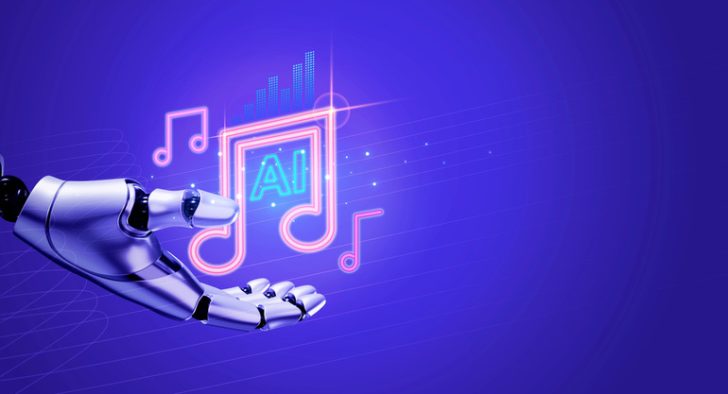
Artificial intelligence is rapidly reshaping the music industry, sparking debate on whether AI can truly craft the next global hit or if it's merely a powerful tool to augment human creativity.
 Story by:
Music Blog
Story by:
Music Blog
Over the years, we’ve seen the music industry use a wide range of technological advancements to break creative limitations. If it is through the use of autotune to correct the pitch of instruments and voice, or by use of synthesizers to give and alter the sound, the music industry is not one to be scared of using technology. Today, with the fast development of artificial intelligence, a new epoch is appearing in the music business, where computing and creativity are combined in a manner that until recently seemed to be impossible.
The field of AI in music has already taken off, with more powerful tools and algorithms benefiting the field of songwriting, usage of machine learning and music learning areas, and automation in the music development industry. To artists, producers, and even home studio creators, AI will represent a strong assistant in the creation process.
It can comb through and study huge archives of songs to find patterns in them, help to create new songs that sound similar to liked styles, or even replicate the styles of particular artists. No matter what you produce next, be it a mix of your next EP or a set of background music for a video, AI-driven tools provide new opportunities and can energise workflow or inspiration in the current environment of the music industry being treated as a technological wonder.
Is AI the Future of Music? How Artificial Intelligence Is Shaping Global Hits
These qualities make AI-powered music production a promising option for the music industry. With reliable and high-speed internet providers like Xfinity Internet serving as the backbone of this technology, both major and junior musicians all across the globe can use the power of artificial intelligence to generate music and make their mark.
By now, you’re probably wondering the same thing the entire world i: “Can Artificial Intelligence Create the Next Global Hit?” and that is exactly what this blog will explore.
During this blog, we will take a thorough look at the aspects below:
- The Science and Technology Behind AI in Music Generation
- The Rise of AI in Music – A Quick Timeline
- Pros and Cons of Using AI in Music Generation
- The Future of AI in Music
Let’s get this party started!
The Science and Technology Behind AI in Music Generation
AI-generated music is music that is created using artificial intelligence without human intervention. This process depends on several subset technologies within the artificial intelligence framework, such as machine learning, deep learning, neural networks, and more, to analyse large amounts of musical data, identify relevant patterns, and create original results.
Let’s take a deeper look at the process.
- The AI-powered Music Production Process
The user of the system feeds the computers that have the Artificial Intelligence systems with large volumes of data on a variety of pertinent musical pieces and pieces can be processed and analysed by the available Artificial Intelligence systems.
The data input assists the AI system to learn and recognise various music patterns, chords, melodies, rhythm, and the style of a particular genre of music. Once the data is analysed, they can then create new and original music, merging the particular style or genre with the ones they have learned and the preset requirements of the user.
Most systems used abide by one of two solutions to providing music created by AI. The music can be created either note by note or it can be created in a larger block type of composition, depending upon what system the individual wants to use. This process has several technologies to assist. Here are the most important ones.
Technologies Supporting AI-Powered Music Production
- Machine Learning: This technology enables the AI system to analyse the vast dataset and identify patterns in musical elements like rhythm, harmony, and melody. It ensures the generated music adheres to requirements.
- Deep Learning: As a subset of machine learning, deep learning allows the identification of more complex patterns in the data provided to the AI system by processing and analyzing countless data layers using artificial neural networks that can replicate a human-like brain process.
- Neural Networks: There are primarily two types of neural networks involved in AI-generated music production, Recurrent Neural Networks (RNNs) and Long Short-Term Memory (LSTM) networks. RNNs handle sequential data, whereas LSTMs can remember long-term dependencies.
- Natural Language Processing: This enables lyrical analysis and generation. Natural language processing models analyse the structure, meaning, and context of text to generate lyrics that capture the vibe and style intended.
- Generative Adversarial Networks (GANs): These consist of two neural networks; one, a generator to produce music, and the other, a discriminator to assess the quality of the music. Together, they allow the system to improve and add realism to its results.
While these technologies are embedded in the current era of AI music generation systems, the groundwork for using AI in music began to make waves dating back to the 1950s. Following that, each era saw significant innovations exploring the power of AI in music generation.
The next section will explore a brief timeline of how using AI in music started and gradually developed into what it is today.
The Rise of AI in Music – A Quick Timeline
AI-powered music production has come a long way from its early days to what we know now. This section will explore a timeline of events, exploring when and how the use of AI in music began.
- 1950s – The Birth
The birth of AI-powered music production dates back to the 1950s when computer scientists first began exploring the idea of using algorithms to compose music. These efforts resulted in the creation of the Illiac Suite by mathematician Leonard Isaacson and composer Lejaren Hiller in 1957.
This musical track was produced using the ILLIAC I computer, which followed the rules of traditional music theory, and is the first notable example of AI-generated music.
- 1960s – The Infancy
In 1965, inventor Ray Kurzweil developed software that could recognise musical patterns and generate a new composition based on those patterns. The inventor and his creation first appeared before the world on the quiz show, I’ve Got a Secret.
- 1980s – The Puberty
Another major wave of progress came in the 1980s when the creation of intelligent musical systems and interfaces helped further pave the road for using AI in music production. Two prime examples of these include MIDI and Emmy.
MIDI (Musical Instrument Digital Interface) Technology: Dave Smith, President of Sequential Circuits, and Chet Wood, an engineer at the same company, created a system to allow electronic instruments, computers, and other devices to communicate with each other.
Emmy (Experiments in Musical Intelligence): Composer, scientist, and Dickerson Emeriti Professor of Music at UC Santa Cruz, David Cope started a program called ‘Emmy’, designed to create original compositions following the styles of renowned classical composers.
- 1990s and Early 2000s – The Adulthood
During this period, computers became more advanced and intelligent, supported by significant AI developments like neural networks and machine learning. These concepts were then applied to music creation in the form of software that could compose original tracks and dynamically learn and adapt to refine their style over time. For musicians and producers, this means AI tools are not just reactive—they evolve.
As the software becomes familiar with specific patterns, genres, or even an artist’s style, it can assist in generating harmonies, melodies, or entire arrangements that align closely with their creative vision. This opens the door for both seasoned professionals and emerging artists to explore new sounds and workflows, all while maintaining creative control.
A prime example of these technologies is Sony’s Flow Machines. Using machine-learning algorithms, the software can analyse large amounts of musical data and generate music based on the requirements. The software even ended up producing the song Daddy’s Car, the first pop song created entirely by AI.
- AI-Generated Music in the Current Era
Today, the use of AI in music in the modern era is booming, thanks to a range of significant technological advancements such as machine learning, cloud computing, and deep learning systems. Tools such as Google Magenta, AIVA, and Open AI’s Jukebox all heavily use deep learning for sound creation across multiple genres.
These tools analyse an ocean of data to identify patterns, chord progressions, melody structures, and lyrical themes to generate impressive human-like results. Open AI’s Jukebox, for example, is known for creating songs with rudimentary vocals that could pass as real artists.
While the results are impressive, AI in music can replace the human touch is a huge debate. The next section will explore the pros and cons of using AI in music.
Pros and Cons of Using AI in Music Generation
It’s no secret that AI can provide musicians of all statures with multiple benefits. However, there are certain downsides to it as well. Let’s explore both, starting with the pros.
Pros of Using AI in Music Generation
- Speed of Production: AI-powered music production tools can generate a larger number of songs compared to what a human can do at the same time. This speed and efficiency are paramount to producers of commercial content such as ads and video games.
- Cost Effectiveness: Since it is generally done through software, AI-generated music does not come with a hefty price tag, unlike traditional music production equipment. This allows musicians or companies on a limited budget to create and use professional sounds.
- Increased Accessibility: The cost-effectiveness and easy-to-use nature of creating impactful music generation platforms opens doors for people outside the music industry, or without formal training, to experiment with music casually or pursue it professionally.
- New Frontiers: Experimenting with AI can result in the creation of newer genres and musical styles. With the large amount of data available for these systems to analyse, they have the potential to innovate and combine unique elements to form entirely new genres.
However, the growing use of AI in music presents a list of certain concerns as well. Let’s explore the most significant ones.
Cons of Using AI in Music Generation
- Lack of Human Touch: AI-generated music lacks human touch, including aspects like emotional range and depth, shared experiences, self-expression, and authentic storytelling. All of these factors play a significant role when it comes to helping listeners establish a connection with the artists they’re listening to.
- Potential for Plagiarism: While AI-powered music production systems create new content, they do rely on existing musical works to do so. This raises the risk of musical results being generated that may be too similar to the original work, resulting in plagiarism concerns.
- Ownership Concerns: The use of AI for producing music gives rise to ownership concerns. Is the AI-based music production tool or platform going to own the music? How will royalties be shared? Since current laws do not provide a way around this, disputes may result.
- Impact on Human Musicians: Music is a very competitive industry, and with the potential to accurately mimic or sometimes outperform human vocals and compositions, AI can put the livelihood of human musicians at risk. Additionally, overdependence can limit creative thinking among musicians.
The Future of AI in Music
Nevertheless, the opportunities that AI-powered music production offers concerning further enhancement, cooperation of different industries, and unsurpassed advancement cannot be ignored. With the further development of AI, we would encounter measures being made to ensure that the music produced by AI is more sophisticated, expressive, and of higher quality.
There is also a lot of room to combine other types of technology: virtual reality (VR) and augmented reality (AR) are two great opportunities among many others. Virtual to Live Music Experiences are emerging as an exciting frontier where digital and physical realms blend. Combined with AI, these immersive technologies have the potential to change the music listening experience, including virtual concerts, interactive music videos, etc. Consider a fan entering a VR room in which one can walk through the creative process of an artist or be immersed in the beat of a piece of music that is particularly designed with an AR interface.
Everywhere in this rush of innovation, there is, however, one central and crucial point, and that is human creativity and artistic purpose. Music production systems powered by AI are strong; however, they still need the subtlety, the tasting, and the supervision that only musicians and producers can offer. With the collaboration of the human mind and the increasing effectiveness of these items, the future generation of musical creation is destined to be dynamic and thrilling.


Comments 0
No Readers' Pick yet.