







The Decemberists’ ‘The Crane Wife’ Songs Ranked
 Story by:
Chris Guest
Story by:
Chris Guest
Even great albums have a hierarchy. Some songs are stone-cold classics, some play quiet yet vital supporting roles, and others simply do not reach the same level as the band’s best material. In this Live Music Blog series, we rank every track from worst to best on some of the most notable albums in music history.
The Decemberists’ major label debut, 2006’s The Crane Wife, stands as a triumphant album that ranks as their finest hour across the group’s two decades of existence. Each of The Crane Wife’s 10 songs is suffused with heart, history, as well as (most importantly) some scintillating melodies, arrangements, and instrumentation decisions.
With this album reaching its landmark 20th anniversary in 2026, now is the perfect time to revisit the album and rank each of its 10 tracks from worst to best. Let’s take a look.
Note: This album is a masterpiece, so each of its 10 tracks is better than many other songs from this era and beyond, but some are admittedly better than others. If you’re a mega-fan of this artist, sound off in the comments if you agree or disagree with the order.
Explore more albums turning 20 this year
Our compendium of 250+ Album Anniversaries in 2026 has albums turning between 10 and 70 years old.
10. “Summersong”
This track peers ahead to the future of The Decemberists, as it sounds like it could have appeared in a different form on a later album, such as 2011’s The King Is Dead. A lovely track, though it lacks the punch and pizazz of other, stronger tracks from the album.
9. “Sons & Daughters”
This album-closing cut plays like a song about what gets built after the fire, after the war, or after whatever version of the world came before has finally reached its end. Despite that apocalyptic feel, there is something rallying, triumphant, and almost communal in it, but also something quietly menacing, which is part of what makes it work.
The song gestures toward renewal without ever fully trusting the people doing the rebuilding, which is probably the right call. Also, always nice to hear a song with the word “dirigible” in it.
8. “The Crane Wife 1 & 2”
This one draws from the Japanese folk tale of the crane wife, in which a man’s act of kindness towards an injured crane he finds on his doorstep is returned in miraculous form, only for his love and devotion to be undone by secrecy, sacrifice, and the limits of human restraint.
Meloy delivers the entire tale with his trademark emotive delivery, and he sounds as if he’s on the verge of tears a number of times during this song—further heightening the emotional impact of the song’s narrative. A powerful song, and we’re just getting started.
7. “The Crane Wife 3”
A beautiful introduction to a tremendously rewarding album to listen to in full, Meloy gives the story beats for the crane wife folktale behind a gentle acoustic guitar backing, with very light instrumentation behind it.
Perhaps Meloy and The Decemberists didn’t want to introduce too much too soon on this album, as this is the song that hews most closely stylistically to their earlier work—specifically the group’s terrific debut album Castaways and Cutouts—which is more or less straight-ahead, history-inspired folk music, similar to some of Al Stewart’s work.
This track boasts the same source material as “1 & 2”, but with a different angle. Splitting the third part away from the longer suite was one of the album’s clever little structural feints, but the root remains that same Japanese tale about devotion, sacrifice, and the kind of human curiosity that ruins a perfectly good miracle.
6. “The Perfect Crime #2”
This story song plays like a feverish, paranoid caper and acts as a wonderful tone-breaker from the album’s more history-based narratives. Listening to this makes me want to rewatch The Sting again.
When listening to this one, come for the way in which Meloy repeats the word “perfect” ad infinitum until it sounds unnatural in your mouth as you sing along, and stay for the dope, duplicated guitar solo (which was an unusual choice for the group up to that point in their career) that swings and glides with a lovely, silken tone.
5. “Shankhill Butchers”
A sea shanty-esque cautionary tale that brings to mind an earlier song from the group, “A Cautionary Tale,” this one has a truly tragic historical background that transforms the song’s eerie tone and funereal vibe into something utterly terrifying, all the more because it’s based on actual events.
The song takes its name from the Shankill Butchers, a loyalist gang tied to the UVF (aka Ulster Volunteer Force) during the Troubles in Northern Ireland, and the lullaby feel only makes it nastier. Meloy knew exactly what he was doing here: take real sectarian horror and sing it like a child’s bedtime song. Chilling yet effective storytelling and songwriting.
4. “O Valencia!”
The first single from the album, and the only one released in the same year that the album came out, “O Valencia!” is an intriguing and spirited Decemberists-style take on a Romeo and Juliet-esque doomed lovers story, though Meloy leaves little doubt that the ending will be a tragic one.
A catchy chorus and an earworm guitar part highlight this notable track, which deserves plaudits for its music video (the only one the group produced for this album):

3.“When the War Came”
A powerhouse listen that features heavier instrumentation of distorted guitars bashing out power chords alongside truly frightening imagery. In different hands with different vocals, this track could be one of the best death metal songs of all time. As it stands, in Meloy and The Decemberists’ hands, it’s an album highlight: as the group has not played in such overtly dark, distorted, and heavy sonics before or since this track’s release.

And the song’s bleak, thrashing backing track is fitting since this song is generally tied to the debilitating and tragic Siege of Leningrad during World War II. Even the Nikolai Vavilov mention is not just decorative Meloy vocabulary; it points to an actual Russian scientist who died under Stalin after trying to preserve food crops during a famine-ravaged era. A standout track that sounds nothing like The Decemberists—to the song’s and the album’s benefit.
2. “Yankee Bayonet (I Will Be Home Then)”
This duet with folk and alternative country singer Laura Veirs is a tremendously human look at one of the most inhuman of conflicts: The Civil War, even going so far as to mention Manassas by name. This track boasts arguably the album’s sweetest melody, which is a smart twist, as Meloy keeps the song an intimate portrait instead of turning it into some oversized battlefield tableau.
That decision helps ground the lyrics’ historical influence, letting them come through loud and clear despite the distance and absence between its two main figures, as they partake in a conversation that may already be happening from beyond the grave.
1. “The Island: Come and See/The Landlord’s Daughter/You’ll Not Feel the Drowning”
The centerpiece of the album is this over-12-minute-long song suite with three distinct sections, the climax of which is the second movement “The Landlord’s Daughter.” This is the “proggiest” song on the entire album, as its heavy use of distorted organ and driving electric piano sounds like something from an early Emerson, Lake, and Palmer album or a Peter Gabriel-era Genesis release… and I mean that as a compliment of the highest order.
This song’s propulsive energy and rather heavy sound is unlike anything The Decemberists had done up to that point, and it points towards the even heavier work elsewhere on the album (see: “When the War Came”). The repeated pummeling electric piano/organ arpeggios as Meloy bellows “Produced my pistol then my saber; To make no whistle or thou will be murdered,” is a spine-tingling moment from The Crane Wife, and one that has aged exquisitely, showcasing the group’s penchant for incredibly dramatic, history-inflected lyrics.

The song simply can’t keep up that intensity and energy for its entire 12 minutes, so the third part of the suite, “You’ll Not Feel the Drowning,” is a far softer, acoustic coda that ties up the song’s narrative elegantly and with panache; a fitting end for The Decemberists’ finest hour.
This suite is the album’s other major literary lift, drawing from Shakespeare’s The Tempest rather than from a historical event. And that’s quite fitting: on an album full of war, folklore, and murder ballad energy, ending this list with a song replete with a shipwreck, a generally menacing tone, and outright theatrical chaos feels just right.
The Decemberists’ Best Album
While fans of the TV show Frasier might be disappointed this album isn’t about Niles’s beloved wife Daphne, those that stick around will be elated to discover this is one of the most interesting and rewarding albums of the 2000s. At 20 years old, the album sounds just as fresh, inventive, and important as it did when it was released, and its blend of folklore, maritime imagery, and melancholy storytelling almost begs for a late-night listen with a classic Irish beer in hand. Godspeed, Decemberists.
As always, ranking songs on a great album is bound to invite some disagreement, and that is part of the fun. Classic albums tend to inspire strong opinions, especially when the gap between the best song and the weakest one is not that wide, so let us know in the comments how you would rank the tracks on this album. Check back soon as this Live Music Blog series continues with more track-by-track rankings of important albums across music history.
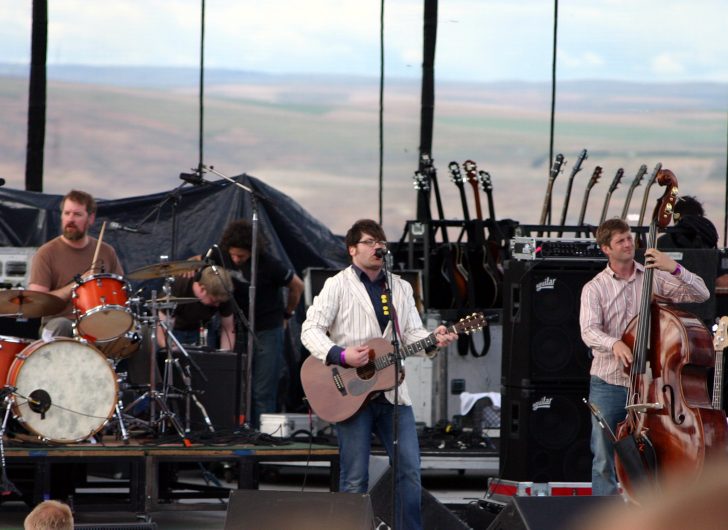
Header Photo Courtesy Chad Riley/Wikimedia Commons


Comments 0
No Readers' Pick yet.