




Manic Street Preachers’ ‘Journal for Plague Lovers’ Tracks Ranked
 Story by:
Chris Guest
Story by:
Chris Guest
Journal for Plague Lovers is not a normal Manic Street Preachers album, nor even a normal “great mid-to-late-career album.” It is a haunted excavation, built from Richey Edwards’ leftover lyrics and performed by a band that sounds wounded, furious, and violently alive all at once.
That spectral presence hovers over the entire thing. You can feel Richey’s presence throughout: in the song titles, in the gallows humor, in the gorgeous turns of phrase, in every line that sounds like it was dragged out of some private wreckage and set against guitars sharp enough to draw blood.
The astonishing part is how the band meets him there in totality. Journal for Plague Lovers could have been a heavy artifact. Instead, in the hands of singer/guitarist James Dean Bradfield, bassist Nicky Wire, and drummer Sean Moore, the album became something transcendent.
Note: This album is an all-time classic and ranks among the best in the Manics’ vast discography. As such, this ranking does not represent “from bad to good” but rather “from great to astounding,” due to the sheer quality found on this top-tier album.
Want more Manics?
Check out our other work on Manic Street Preachers, such at a retrospective of Everything Must Go on its 30th birthday as well as the tracklist of This Is My Truth Tell Me Yours ranked.
14. “She Bathed Herself in a Bath of Bleach”
There had to be one song pulling up the rear, and, in this case, that’s track six. While not a bad song by any means (this album contains none of those, to be fair), it is the weakest both lyrically and musically and is also the least memorable. Still a solid album track.
13. “Doors Closing Slowly”
A nice change of pace, as “Doors Closing Slowly” represents one of the quietest songs on the album. Boasting an intriguing melody line and some choice lyrics such as “self-defeating, oh, fuck yeah” and “silence is not sacrifice.” A beautiful and underrated deep cut.
12. “Marlon J.D.”
One of the few songs on the album that employs a drum machine, this track sounds very reminiscent of the intense post-punk production style of the group’s 1994 masterpiece, The Holy Bible. Featuring lyrics inspired by the life of Marlon Brando, this one hits hard and moves on fast, with a run time of only 2:50. Powerful, combustible, and to the point: a classic Manic Street Preachers song.
11. “Me and Stephen Hawking”
One of the album’s most mordantly funny tracks, “Me and Stephen Hawking” leans into the kind of bleak, provocative humor that runs through Richey Edwards’ writing. The title hook is deliberately uncomfortable, but the song itself rips pretty hard, balancing its barbed lyrical charge with a classic Manics feel more than 20 years after the group was founded. A strong third track on JfPL.
10. “Facing Page: Top Left”
The “obligatory acoustic song” from the album transcends that negatory tag by being a stunning meditation on self-image with striking turns of phrase and a beautiful harp backing. A beautiful acoustic deep cut on par with “Small Black Flowers That Grow in the Sky” from the now-30-year-old Manics album Everything Must Go.

9. “Pretension//Repulsion”
“Pretension//Repulsion” is one of the album’s most uncomfortably effective middle-distance bruisers, all twitchy disgust, sharp angles, and classic Manics bile. It does not quite have the instant melodic grip of the tracks above it, but that is partly the point. This is ugly by design, with Richey Edwards’ title doing half the work before Bradfield and company turn the rest into a compact little act of self-loathing theater. A nasty, necessary album cut.
8. “Journal for Plague Lovers”
This track grows on you. While it was not a favorite of mine upon first listening to the album nearly 20 years ago, it has grown in my estimation over the years and is now firmly ensconced in the top 10 of a 14-song album. Strong musicianship, pristine yet pummeling production (thanks Mr. Albini), and classic Richey Edwards lyrics combine to make this a notable “deeper cut” from the album.
7. “Virginia State Epileptic Colony”
Arguably the only song on the album that could be deemed a straight-ahead pop song via its jangly guitar, earworm verses, and singsongy chorus. The lyrics betray a more menacing and disturbing undercurrent as Edwards marries the name of an actual institution in Virginia to some of his own sad experiences at mental health facilities. Still though, the tongue-in-cheek combination of the lyrics with the singalong chorus, eminently catchy melody, and the honky-tonk piano solo (courtesy of Wire, apparently) showcases the foxy humor interlaced through this powerful and cathartic album.

6. “All Is Vanity”
A pummeling guitar riff gives way to one of the most powerful opening couplets on the entire album: “Haven’t shaved for days, gives the appearance of delay.” Beyond that striking lyric, the line “I really don’t mind being lied to” sounds like it applies directly to the modern state of humanity/media/social media/etc. Profound and potent work from the Manics, as usual.
5. “This Joke Sport Severed”
Upping the ante with two “obligatory acoustic songs” from the same album, this is the better track overall, as it boasts a little more instrumental heft, and is generally a catchier and more powerful listen. Again, the lyrics are astounding, as you can hear the pain and tortured emotional state that Richey Edwards was in upon writing it—all plainly laid out via a towering vocal performance from Bradfield. This track represents the Manics at their timeless best.

4. “Jackie Collins Existential Question Time”
One of the biggest earworms on an album that is mostly remembered for its punishing qualities is the guitar riff from this, the second track from JfPL. With a guitar riff that rivals (if not outright bests) the catchiest in JDB’s entire recorded output—specifically “Motorcycle Emptiness” and “Autumnsong”—the surrealistic and fairly amusing lyrics combine with a supremely catchy melody and fairly short run time (only 2:24) make this one of the more immediately replayable tracks across the entire album. Terrific stuff that showcases the tremendous quality level on JfPL.

3. “Bag Lady”
This is the song that sounds the most like it came from the album that hews most closely to it artistically, and the last one that featured a majority of lyrics from the late Richey Edwards: 1994’s The Holy Bible. The skittering yet muscular guitar part, the bellowed, nearly distorted vocals from Bradfield, the guttural, atonal guitar solo; it’s all here—elements that were lifted directly from the group’s crowning artistic achievement. The fact that this was a bonus track tacked on to the end of the final song on the album showcases that the Manics were operating at the peak of their powers at this point.
2. “William’s Last Words”
Speaking of the final song on the album, this heart-wrenching song truly sounds like a suicide note directly from the mind of Edwards, released 14 years after he was last seen or heard from. And, in true, Manics fashion, it somehow transcends its extremely sad genesis and becomes about something more; something greater. Edwards truly sounds hopeful here, and the fact that this song is Nicky Wire’s only lead vocal on the album—in which you can hear him actively choking back tears as he croons the last will and testament of his dearly departed friend and comrade—only makes it a more powerful listen. A towering achievement and guaranteed to make your eyes misty.

1. “Peeled Apples”
The Manics certainly know how to open an album, but there can be no denying the dramatic impact that “Peeled Apples” has on anyone brave enough to venture into this bruising, feverish, and strangely addictive record. It arrives in a storm of jagged guitar, militaristic momentum, and lyrical menace, immediately setting the tone for an album that feels both excavated and painfully alive.
As Wire’s thudding bass line intermingles with Bradfield’s punishing yet splintery guitar riff followed by Moore’s booming drum part crashing in, you can almost feel Richey’s presence physically hovering above the group as they tear into this masterpiece, which stands up to anything in the Manics’ entire decorated discography, and is easily a top-five song therein.

That “riderless horses” image is one of the album’s most striking flashes, capturing the weird, haunted vacancy that runs through so many of Richey’s lyrics here. It sounds apocalyptic without reaching for cheap grandeur, and Bradfield sings it with the right mix of force and unease, as if the song is chasing him as much as he is leading it.
By the final chorus, “Peeled Apples” has already made its case, and then those shredding guitar accents come slashing through the mix to push it over the top. It is fierce, unsettling, weirdly exhilarating, and absurdly effective as an opener. On an album stacked with great songs, this is the one that kicks hardest and leaves the deepest bruise.
An Amazing Journal, for Plague Lovers or Otherwise
In the end, Journal for Plague Lovers remains one of the Manics’ most remarkable triumphs: abrasive, literate, surprisingly humorous, and far more moving than an album this jagged has any right to be. It is ghostly without feeling hollow, reverent without feeling embalmed, and incredibly powerful precisely because the band never shies away from the sadness and discomfort at its core.
The miracle is that it does not feel like a museum piece or a grim act of band mythology. It feels alive. Bruised, brilliant, uncomfortable, and still kicking holes in the wallpaper. Richey Edwards may hover over the whole release, but the Manics somehow turn that presence into momentum, making Journal for Plague Lovers feel less like an ending than one last impossible yet inspired musical transmission from their friend and brother. RIP Richey.
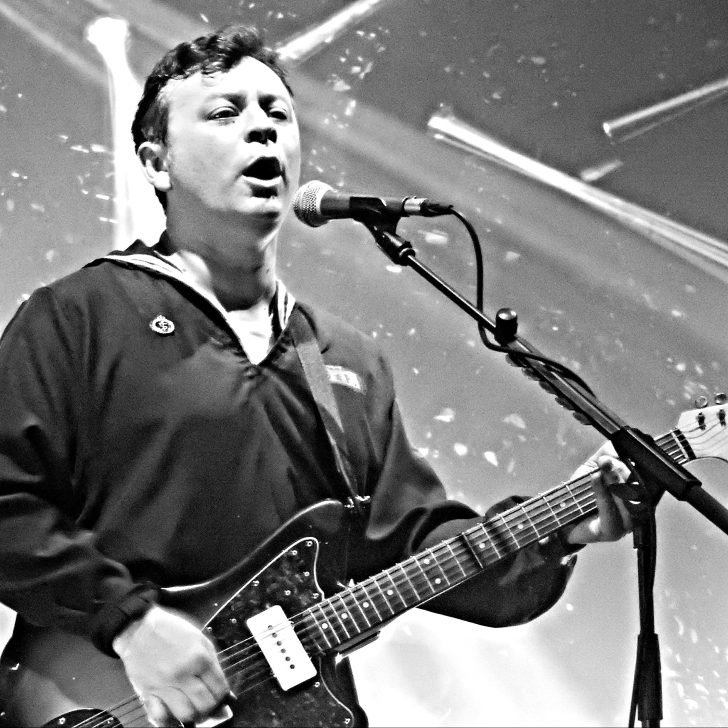
Header Photo Courtesy Drew de F Fawkes/Wikimedia Commons


Comments 0
No Readers' Pick yet.