








Can Music Make You Smarter? The Link Between Students, Creativity, and Learning
Can music actually make students smarter? New insights reveal how beats, brains, and books might be more connected than you think.

 Story by:
Music Blog
Story by:
Music Blog
Music has long been recognised as more than just entertainment. For students, music can be more than background noise, it can serve as a powerful tool to enhance learning, boost creativity, and improve cognitive function. Whether it’s instrumental tracks aiding concentration or lyrical compositions sparking inspiration, engaging with music often plays a significant role in shaping a student’s academic journey.
But does immersing oneself in melodies and rhythms truly make one smarter? Let’s explore the intricate relationship between music, creativity, and academic performance
The Cognitive Benefits of Musical Engagement
Engaging with music, whether through listening or active participation, stimulates various areas of the brain. Studies have shown that musical training can enhance memory, attention, and even reading abilities. This is because playing an instrument or understanding musical structures requires the integration of auditory, visual, and motor skills, providing a comprehensive workout for the brain.
While listening to music doesn’t directly increase intelligence, it can improve mood and reduce stress, creating a conducive environment for learning. For instance, classical pieces like Bach’s “Goldberg Variations” have been associated with enhanced focus and concentration. This has led some students to incorporate such music into their study routines, sometimes even seeking assistance from a PowerPoint presentation writing service to organise their learning materials better.
Music’s Role in Enhancing Creativity
Creativity is a vital skill in academic and professional settings. Music has been found to foster creative thinking by promoting divergent thinking—the ability to generate multiple solutions to a problem. Listening to music, especially instrumental pieces, can stimulate emotional responses and cognitive processes that lead to innovative ideas.
Moreover, students who engage in musical activities often exhibit higher levels of originality in their work. This is particularly evident in tasks that require imaginative thinking, such as writing essays or developing projects.
Academic Performance and Music Education
Beyond creativity, music education has been linked to improved academic outcomes. Research indicates that students who participate in music programs tend to perform better in subjects like mathematics and languages. This correlation is attributed to the discipline, focus, and analytical skills developed through musical training.
Furthermore, music education can enhance emotional intelligence, helping students manage stress and build resilience, qualities essential for academic success.
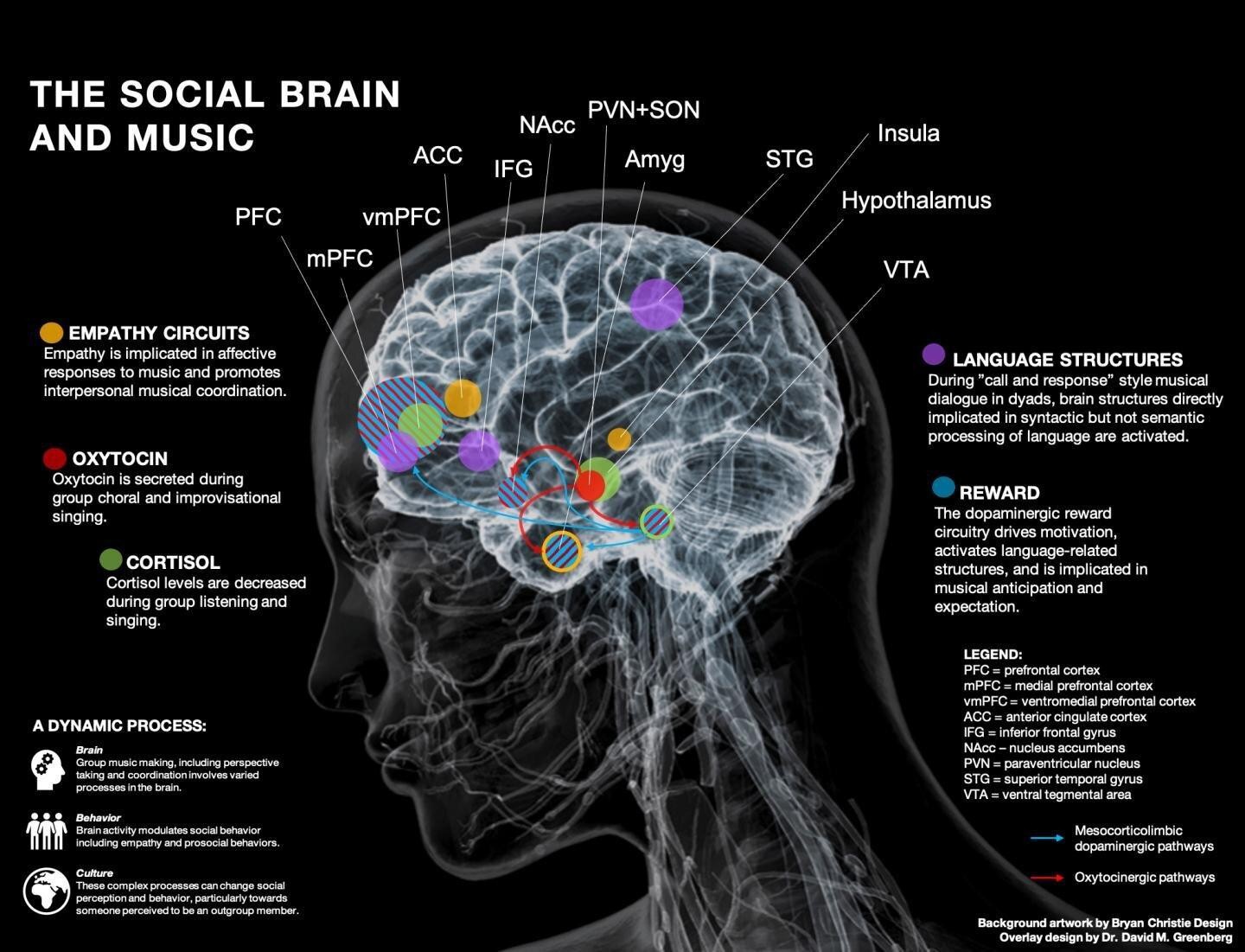
Photo Credit: Medicalxpress
Practical Applications for Students
To harness the benefits of music in your academic journey:
- Incorporate music into study sessions: Choose instrumental or classical music to minimise distractions.
- Engage in musical activities: Learning an instrument or joining a choir can boost cognitive skills and provide a creative outlet.
- Use music strategically: Employ music to set the mood for different tasks—upbeat tunes for motivation, calming melodies for relaxation.
- Seek support when needed: If you’re struggling with assignments, consider resources like WritePaper.com for professional assistance.
Absolutely — here’s a 600-word continuation that builds on the original piece with a more conversational, student-focused tone. This part expands on the earlier arguments and offers relatable insights while staying grounded in your theme:
Making Music a Study Ally: A Deeper Dive
Let’s take a step back and consider why music, more than just a background filler, can shape how we approach learning daily. Whether you’re prepping for finals, designing a class project, or drafting that all-important term paper, the right soundtrack might make more difference than you think.
First, think about how music affects your mental environment. Academic work demands focus, but also flexibility. You need to absorb dense material, connect ideas, and sometimes even think creatively under pressure. That’s where music steps in—not as a magic pill, but as a subtle enhancer. Instead of seeing music as a distraction, students who use it intentionally often discover it’s like turning on the “focus mode” switch.
Study Smarter: How Background Music Can Improve Focus and Brain Function
This doesn’t mean blasting high-BPM dance tracks while reading dense philosophy texts. It’s about learning how your brain responds to different musical styles. For many, low-tempo, lyric-free instrumental pieces help eliminate mental noise. Others turn to nature sounds or lo-fi beats because the consistency relaxes the mind and keeps it from wandering.
But what about multitasking? You might’ve heard the claim that listening to music while studying is a form of “task-switching” that hurts performance. This is partly true, especially when the music doesn’t match the task or your learning style. Lyrics can be distracting, and a jarring rhythm might break your concentration. However, when chosen wisely, music becomes a valuable companion.
For tasks that are repetitive or low in complexity, like formatting documents or practising math problems, the right background music can ease mental fatigue and help maintain focus over time. It’s about tuning in to what complements your workflow—sometimes, the perfect playlist can make all the difference.
Music and Emotional Regulation
Another layer to this conversation is how music helps with emotional regulation. Stress, boredom, and anxiety are regular visitors in academic life, especially during exams or major deadlines. Music won’t make those challenges disappear, but it gives you a reliable way to modulate your mental state.
Consider this: You’re stuck on an assignment, your motivation is tanking, and procrastination is calling. You throw on a motivational playlist or a calming classical track. Ten minutes later, your shoulders relax, your thoughts clear, and the task no longer feels so heavy. That’s not just a placebo effect—it’s neuroscience in action.
Students often underestimate how much their emotional state affects their academic output. You’re not just a brain trying to memorise facts—you’re a whole person, and music has a unique way of reaching into the emotional space and clearing it up. That clarity often leads to better learning outcomes.
Creativity Isn’t Just for Art Majors
In academic circles, creativity is sometimes pigeonholeed as something only relevant to arts or design students. But every student, regardless of major, benefits from creative thinking. Whether you’re solving complex equations, crafting persuasive arguments, or planning group presentations, creativity is the glue that binds information together in new ways.
Musical exposure, especially active participation like playing an instrument or composing, encourages this kind of flexible thinking. And even passive listening helps by nudging the brain into a more imaginative mode. That’s why students involved in music—band members, hobby musicians, even casual beatmakers—often report better idea generation and more confidence in approaching unfamiliar tasks.
Think about your last group assignment. Who usually takes charge of brainstorming the presentation structure? Who thinks of adding an interactive element or visual twist? It’s often the student who brings some kind of creative hobby into the mix. Music primes your brain to think beyond the obvious, which is invaluable in both academic and professional contexts.
Studying with Music: How the Right Tracks Can Boost Brain Power and Productivity
While music may not directly increase intelligence, its influence on cognitive functions, creativity, and academic performance is undeniable. By integrating music thoughtfully into your study habits, you can turn routine learning into a more immersive and motivating experience. Whether it’s instrumental tracks for deep focus or upbeat rhythms to energise your sessions, the right soundscape can elevate both mood and mental performance.





Comments 0
No Readers' Pick yet.