





60 Best Irish Drinking Songs That Never Fail to Get the Pub Singing

 Story by:
Editorial Dept.
Story by:
Editorial Dept.
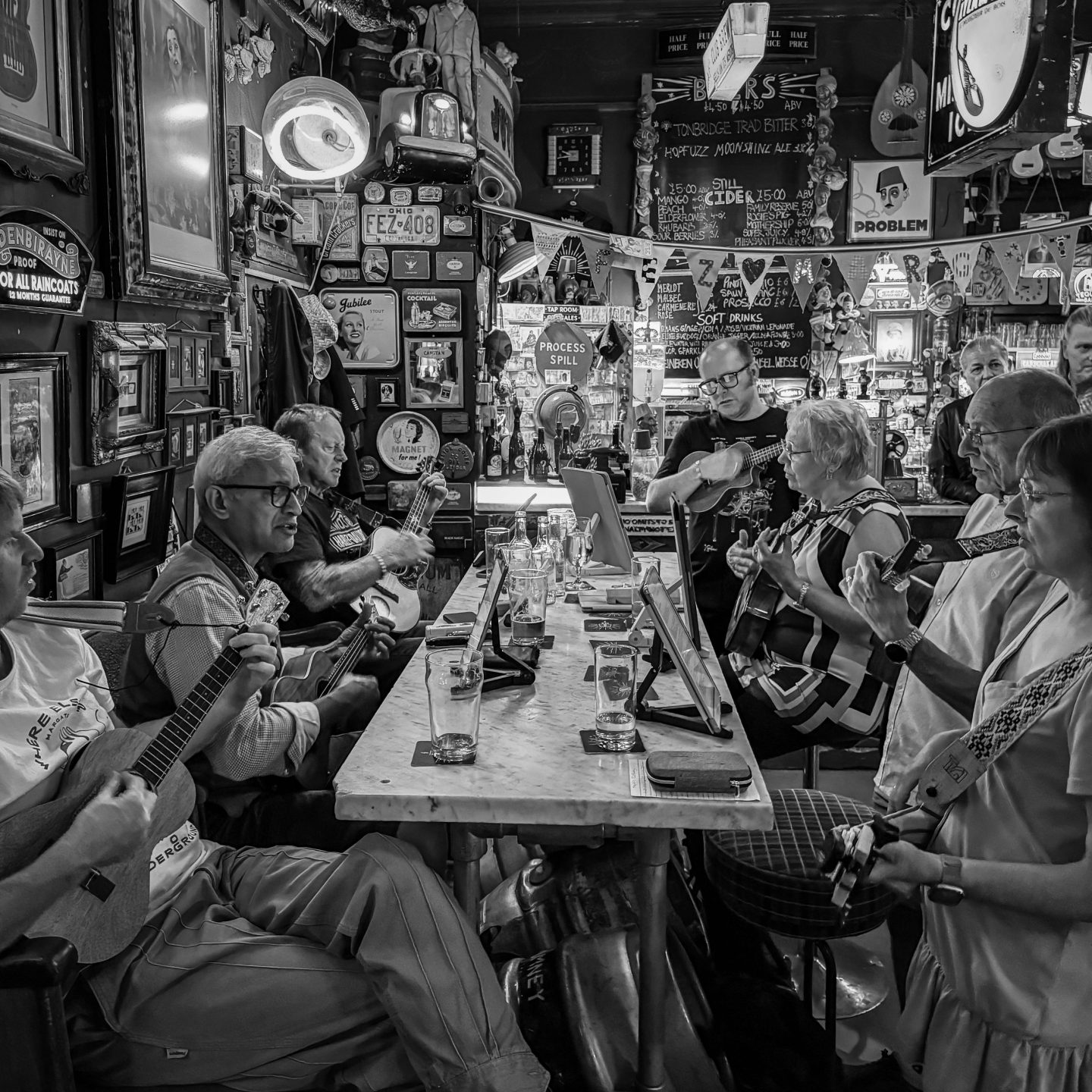
Irish drinking songs aren’t all about drinking. That sounds like a contradiction until you spend an evening listening to the songs people actually sing in Irish pubs. Whiskey and beer certainly get their share of verses, but so do doomed romances, emigrants dreaming of home, sailors heading to sea, Dublin characters, political struggles, troublesome animals, and wakes that go badly off script.
The label is really shorthand for a much wider pub-song tradition: songs that work when people sing them together. There’s another distinction worth making. Not every song on a typical Irish pub playlist originated in Ireland. Some came from the Irish diaspora, but are still undeniably Irish.
With that in mind, these are 60 of the best Irish drinking songs and Irish pub standards, from rowdy choruses to songs capable of bringing the same room almost completely silent.
Best Irish Drinking Songs at a Glance
Looking for a place to start? These 10 Irish pub favorites cover everything from rowdy singalongs and drinking anthems to traditional ballads that bring the whole room together.
|
Song |
Mood |
Best For |
|---|---|---|
|
The Wild Rover |
Rowdy, upbeat |
Crowd participation |
|
Whiskey in the Jar |
Lively, rebellious |
Classic pub singalongs |
|
The Irish Rover |
Fast, humorous |
High-energy group singing |
|
Seven Drunken Nights |
Comical, mischievous |
Drinking-song humor |
|
Finnegan’s Wake |
Playful, chaotic |
Lively pub gatherings |
|
Molly Malone |
Nostalgic, melodic |
Easy group singalongs |
|
The Rocky Road to Dublin |
Fast, energetic |
Raising the energy |
|
The Hills of Connemara |
Spirited, boisterous |
Party playlists |
|
The Fields of Athenry |
Emotional, stirring |
Big communal choruses |
|
The Parting Glass |
Reflective, sentimental |
Closing out the night |
Classic Irish Drinking Songs Every Pub Regular Should Know
Start with the songs that need almost no introduction. Even when people don’t know every verse, they usually know exactly when to come in.
1. The Wild Rover
“The Wild Rover” may now sound like the definition of an Irish drinking song, but its history is more complicated than its modern reputation suggests.
Versions of the song circulated outside Ireland long before the Dubliners helped make their lively rendition internationally familiar during the folk revival. Earlier forms center on a repentant drinker promising to abandon his old habits rather than celebrating them.
None of that has stopped generations of pub crowds from enthusiastically answering the famous “no, nay, never” refrain.
2. Whiskey in the Jar
Robbery, betrayal, romance, and whiskey all fit into one of the most durable songs in the Irish repertoire.
“Whiskey in the Jar” tells the story of a highwayman who robs a military or government official before being betrayed, usually by a woman close to him. Names and locations vary between versions, as they often do in traditional songs.
The song also proved unusually adaptable. Folk performers carried it for generations, while Thin Lizzy turned it into a rock hit in the 1970s.
From Pub Standard to Rock Classic
“Whiskey in the Jar” made the jump from traditional folk song to rock classic thanks in large part to Thin Lizzy. If that side of Irish music is more your speed, check out our ranking of every song on Thin Lizzy’s Jailbreak.
3. The Irish Rover
Everything aboard the Irish Rover is excessive.
The ship is enormous. The cargo is ridiculous. The crew grows stranger as the verses continue. Eventually the entire adventure collapses into disaster.
That escalating absurdity is the point. Different versions alter details, including the number of masts and people aboard, illustrating the way the song has changed through performance. Its chorus remains far easier to master than its increasingly elaborate story.
4. Seven Drunken Nights
Every night, a drunken husband comes home and notices evidence that another man may have been there. Every night, his wife supplies an explanation more unbelievable than the one before.
“Seven Drunken Nights” is an Irish version of a much older song family related to “Our Goodman,” which was documented in Scotland in the 18th century. The Dubliners made their version famous in 1967.
Some performances stop before all seven nights because the later verses become considerably more explicit.
5. Finnegan’s Wake
Tim Finnegan has a problem. He is dead. At least everybody thinks he is.
During his wake, the mourners drink, argue, and eventually send whiskey flying over the body, producing one of folk music’s great comic reversals.
Finnegan’s Wake combines drinking, death, fighting, and resurrection at a pace that leaves little room to recover between verses. It also gave James Joyce the title for his famously difficult novel Finnegans Wake, although Joyce dropped the apostrophe.
6. The Black Velvet Band
A young man meets a woman, becomes implicated in a crime, and ends up sentenced to banishment.
The version now strongly associated with Irish performers commonly begins in Belfast, but “The Black Velvet Band” belongs to a broader British and Irish broadside tradition. Earlier versions were set in England, and variants later circulated in Ireland, Australia, Canada, and the United States.
The Dubliners’ 1967 recording helped establish the form familiar to modern pub audiences.
7. Molly Malone
In Dublin’s most famous street song, Molly Malone pushes a barrow and sells shellfish. Whether Molly was a real historical person is another matter.
The Dictionary of Irish Biography describes her as probably a generic representation of a Dublin street trader rather than an identifiable woman. The earliest surviving sheet music for the familiar song dates to 1884 and is associated with Edinburgh-based composer James Yorkston.
Today, the song and its “cockles and mussels” refrain are inseparable from Dublin identity.
8. The Rocky Road to Dublin
“The Rocky Road to Dublin” gives its singer almost nowhere to hide.
The words rush forward in a slip-jig rhythm as the narrator leaves Tuam, passes through Dublin, heads toward Liverpool, and encounters trouble along the way.
The lyrics are credited to D.K. Gavan, who wrote them for music-hall performer Harry Clifton in the 19th century. The tune itself was already known earlier. For a pub audience, keeping up is part of the fun.
9. I’ll Tell Me Ma
“I’ll Tell Me Ma” began as a children’s singing and street-game song rather than a pub anthem.
Versions were collected in different parts of Britain and Ireland, with the Irish version especially associated with Belfast and its “Belle of Belfast City” refrain.
Its short phrases, quick tempo, and playful courtship story made the jump from playground to folk set unusually easy.
10. The Holy Ground
“The Holy Ground” is closely associated with Irish singing and particularly with Cobh in County Cork, but its deeper history may reach beyond Ireland.
Researchers have linked it to related maritime songs including “Old Swansea Town Once More.”
Whatever its precise route into the Irish repertoire, the farewell theme and answering chorus make it an ideal communal song.
11. The Wild Colonial Boy
“The Wild Colonial Boy” sits between Irish and Australian tradition.
Its outlaw hero changes identity across versions, but the song is often connected with the story of Irish-born bushranger Jack Donohoe, who was transported to Australia and later killed by police. Folklore subsequently reshaped him into several different “wild colonial boys.”
That mixture of history and legend helped the ballad survive in both countries.
12. The Rare Auld Mountain Dew
No, this is not a song about the neon-green soda.
“Mountain dew” refers to illicit whiskey or poitín. The song dates to the 19th century and developed from “The Mountain Dew,” with words by Irish-American entertainer Edward Harrigan and music credited to David Braham for an 1882 stage production.
Later Irish performers turned it into a pub standard.
High-Energy Irish Pub Songs Made for Loud Singalongs
These are the songs to reach for after the room has warmed up. Some are authentically Irish. Others came into the Irish pub repertoire from elsewhere and stayed.
13. The Hills of Connemara
Poitín returns in “The Hills of Connemara,” this time with illegal distilling at the center of the action.
The song moves quickly and gives its chorus enough repetition to bring in a crowd that has never heard the verses before.
It has become a staple of lively Irish folk sets precisely because standing quietly through it is difficult.
14. Whiskey, You’re the Devil
The title already tells you that the relationship is complicated.
“Whiskey, You’re the Devil” treats drink as both temptation and source of trouble while bringing soldiers, separation, and romance into the story.
The tune stays lively even when the consequences in the narrative aren’t.
15. The Moonshiner
“The Moonshiner” is another case where an “Irish drinking song” label can obscure the song’s history.
Its precise origin is uncertain, but evidence points toward an American text that later became popular in Ireland with a different melody. Delia Murphy recorded an Irish version in 1939, and the Clancy Brothers and Tommy Makem later helped spread it further.
It nevertheless became thoroughly at home in Irish folk performance.
16. The Jug of Punch
Few songs make their intentions clearer.
“The Jug of Punch” is a traditional drinking song praising companionship and the pleasures of a full glass. Versions were collected in Ireland, including County Tyrone, as well as elsewhere in the folk tradition.
It works in a pub because the central idea does not require much explanation.
17. Beer, Beer, Beer
Also known as “Charlie Mopps,” “Beer, Beer, Beer” celebrates a fictional inventor of beer.
The song’s exact birthplace is uncertain, although it belongs to the wider British Isles drinking-song tradition rather than having a securely documented Irish origin.
Irish and Celtic performers nevertheless embraced it. Marc Gunn, for example, recorded “Charlie Mopps (Beer, Beer, Beer)” for his 2013 collection Best Irish Drinking Songs.
18. Nancy Whiskey
“Nancy Whiskey” is frequently heard beside Irish drinking songs, but it should not be introduced as an originally Irish composition.
The song is also known as “The Calton Weaver” and belongs to Scottish tradition. Its narrator looks back on the financial and personal cost of his drinking.
That cautionary message has not prevented it from becoming a popular pub number or from appearing on Marc Gunn’s Best Irish Drinking Songs collection.
19. Dicey Reilly
“Dicey Reilly” is a Dublin song about a woman known for her attachment to drink.
Different performers have added verses and changed details over time. The song is sometimes spelled Dicey Riley, particularly in modern listings and recordings, although “Dicey Reilly” is the familiar title in Irish ballad collections.
The humor is affectionate, and the chorus makes Dicey one of the great recurring characters of Dublin pub music.
20. Waxies’ Dargle
The “Waxies” were Dublin shoemakers. The Dargle was associated with an outing to the Bray area.
That gives “Waxies’ Dargle” a distinctly local foundation, but most of the comedy comes from a more universal problem: people want to go out and don’t have enough money.
Borrowing, pawning, drinking, and domestic arguments follow.
21. The Craic Was Ninety in the Isle of Man
The trip sounded like a good idea.
The consequences are another matter.
Written by Dublin musician Barney Rush, “The Crack Was Ninety in the Isle of Man” became particularly well known through Christy Moore. The older title used the spelling “crack”; “craic” became the familiar Irish spelling later.
The song turns an excursion into an escalating tale of drinking and disorder.
22. Johnson’s Motor Car
Unlike many folk tales, this one has a documented historical incident behind it.
In 1920, members of the IRA in County Donegal commandeered Dr. Henry Johnston’s car for use in moving weapons. Willie Gillespie wrote a humorous song about the episode soon afterward.
The result is historical material delivered at the speed of a comic pub song.
23. Follow Me Up to Carlow
“Follow Me Up to Carlow” looks much farther back.
The song celebrates the forces of Fiach McHugh O’Byrne and their victory over an English army at the Battle of Glenmalure in 1580.
Its subject is military rather than alcoholic, but the pounding rhythm and direct refrain have made it a natural fit in louder folk sets.
24. The Merry Ploughboy
“The Merry Ploughboy,” also known as “Off to Dublin in the Green,” follows a ploughman who leaves agricultural work to join the republican cause.
The song is credited to Jeremiah Lynch and adapts the framework of an earlier English military song about a ploughboy joining the British Army.
Its marching rhythm explains why it remains effective as a group song.

Funny Irish Drinking Songs and Pub Stories
Some pub songs aim for emotional depth. These mostly aim for trouble.
25. The Night Paddy Murphy Died
“The Night Paddy Murphy Died,” also circulated as “The Night Pat Murphy Died,” describes a wake that becomes progressively less respectful.
The song is strongly associated with Newfoundland rather than originating as an old Irish ballad, although its story deliberately draws on an Irish wake. An early commercial recording was made by the Irish-American Flanagan Brothers in New York in 1926.
The drinking and escalating disorder make its pub-song appeal obvious.
26. The Sick Note
A worker explains why he cannot come to work. Then things become complicated.
Pat Cooksey stated that he wrote the song in 1969 as “Paddy and the Barrel,” drawing inspiration from Gerard Hoffnung’s famous barrel-and-bricks story. It subsequently circulated under titles including “The Sick Note,” “Why Paddy’s Not at Work Today,” and “Murphy and the Bricks.”
The humor depends on each accident causing an even less probable one.
27. The Orange and the Green
A Catholic mother and Protestant father leave their son trapped between two traditions.
“The Orange and the Green,” also called “The Biggest Mix-Up,” was written by Anthony Murphy of Liverpool.
It treats religious and cultural division through domestic comedy, though the historical tensions behind the joke are considerably more serious.
28. Paddy McGinty’s Goat
The setting is Irish. The writers were not.
“Paddy McGinty’s Goat” was written in 1917 by English songwriters R.P. Weston and Bert Lee with the American duo the Two Bobs.
The goat causes enough destruction to carry the song without any complicated plot. Irish singer Val Doonican later became closely associated with it.
29. The Old Dun Cow
A pub catches fire. Instead of leaving immediately, the drinkers discover the cellar.
That’s the joke behind “The Old Dun Cow,” also commonly recognized by its “MacIntyre” refrain.
It belongs to British music-hall and pub-song tradition rather than being an old Irish composition, but Irish and Celtic performers have made it a familiar addition to drinking-song collections.
30. The Rattlin’ Bog
“The Rattlin’ Bog” replaces the much less verifiable “Tim Finnegan’s Courtship” in this list.
It’s a cumulative folk song. Each verse adds another object to an increasingly long chain, and performers often increase the tempo until remembering the sequence becomes the real contest.
The Roud Folk Song Index places it within a much wider international song family, while Irish versions were collected from oral tradition, including from the Clancy family in County Tipperary.
31. The Mermaid
Sailors see a mermaid. Disaster follows. But the mermaid does not actually sink the ship.
“The Mermaid” belongs to a much older international ballad tradition. The brisk version associated with Irish folk performance owes much to the Clancy Brothers, whose arrangement developed from American folksinger Paul Clayton’s 1956 setting.
It’s a perfect example of a song becoming “Irish” through repertoire rather than origin.
32. Mrs. McGrath
The rhythm can sound playful. The subject is brutal.
Mrs. McGrath’s son returns from military service severely wounded, and the mother’s reaction turns the song into a pointed anti-war piece.
Its ability to carry anger through repetition and dark humor is part of what makes it endure.
33. The Irish Ballad
Tom Lehrer’s “The Irish Ballad” is parody, not tradition.
Lehrer takes the structure and sentimentality of an old murder ballad and pushes both into deliberate absurdity. The body count rises while the delivery remains cheerfully controlled.
It works best for listeners who already know exactly what sort of folk song he is mocking.
34. Mickey Marley’s Roundabout
Mickey Marley was real.
For decades, the Belfast street entertainer traveled with his horse-drawn roundabout, becoming a familiar local figure. Seamus Robinson later wrote “Mickey Marley’s Roundabout,” helping turn those memories into song.
For Belfast listeners, the attraction is as much about place and memory as comedy.
35. The Big Strong Man
“The Big Strong Man” operates on increasingly impossible boasts.
The central figure moves through historical events and extraordinary feats with the logic of a story that improves every time somebody tells it.
It became popular in Irish folk and pub performance, but its wider circulation means it’s safer to describe it as part of the repertoire than to assign it an exclusively Irish origin.
36. Delaney’s Donkey
A stubborn donkey refuses to move. Everyone tries to fix the problem. Nobody improves it.
“Delaney’s Donkey” is another Irish-themed music-hall song rather than anonymous Irish folk material. William Hargreaves wrote it in the early 20th century, and Val Doonican later gave it a particularly strong association with Irish popular entertainment.
Irish Ballads About Love, Loss, and Leaving Home
A good pub night needs changes of pace. These are the songs that often get quieter performances and louder final choruses.
37. The Parting Glass
“The Parting Glass” is deeply embedded in Irish singing, but its earliest roots are Scottish.
Versions of the words existed by the early 17th century, and the song later entered Irish collections. The Clancy Brothers helped popularize it for modern audiences when they recorded it in 1959.
Few songs are better suited to the final minutes of an evening.
38. Raglan Road
Patrick Kavanagh wrote the poem that became “On Raglan Road” after his unreturned love for Hilda Moriarty.
It was first published in 1946 under the title “Dark Haired Miriam Ran Away.” Kavanagh intended the words for the traditional air “The Dawning of the Day”; Luke Kelly later became one of the song’s defining interpreters.
It’s a listening song more than a shouting song.
39. Carrickfergus
“Carrickfergus” sounds ancient because parts of its history are.
The modern English-language form draws on older material connected with the Irish-language song “Do Bhí Bean Uasal.” Dominic Behan published a three-verse version in 1965 and said he had learned parts of it from actor Peter O’Toole.
Its fractured history suits a song already filled with distance and longing.
40. Spancil Hill
Michael Considine left County Clare for America and wrote about the home he missed.
“Spancil Hill” follows an emigrant who dreams that he has returned to familiar people and places before waking far away again. Considine died in the United States in 1873, still a young man.
The song’s emotional force comes from how briefly the dream gives him everything back.
41. The Galway Shawl
A traveler meets a young woman near Oranmore, visits her family home, plays music, and eventually has to leave.
The earliest known collected version of “The Galway Shawl” was taken down by Sam Henry from singer Bridget Kealey in 1936.
Its western Irish setting and understated romance have made it a durable ballad.
42. Red Is the Rose
“Red Is the Rose” is strongly associated with Irish singers, but its tune is essentially the melody familiar from the Scottish “Loch Lomond.”
That shared musical foundation is another reminder of how closely Irish and Scottish song traditions have interacted.
The lyric itself is simple: natural beauty is measured against the person the singer loves.
43. Grace
“Grace” is modern compared with many songs on this list.
Frank and Seán O’Meara wrote it in 1985 about Grace Gifford and Joseph Mary Plunkett, who married in Kilmainham Gaol shortly before Plunkett was executed for his role in the 1916 Easter Rising.
Jim McCann’s performance helped establish it as one of Ireland’s most recognizable historical love songs.
44. The Town I Loved So Well
Phil Coulter wrote “The Town I Loved So Well” about his native Derry in 1972.
The song begins with childhood and working-class memory, moves into the violence and militarization of the Troubles, and ends by looking toward peace.
That progression explains why it can feel personal and political without becoming a simple slogan.
45. The Rare Auld Times
“The Rare Auld Times” watches Dublin change through the eyes of a man who feels increasingly separated from the city around him.
Written by Pete St. John, it mourns old streets, employment, relationships, and landmarks disappearing in the name of development.
It’s a city song built around the uncomfortable fact that loving a place does not stop it changing.
46. The Leaving of Liverpool
“The Leaving of Liverpool” is a maritime farewell song rather than an exclusively Irish composition.
Its narrator leaves Liverpool for another voyage while reassuring the person left behind that the separation is temporary.
Irish folk singers adopted it naturally because its themes of departure and separation overlap so closely with Ireland’s enormous repertoire of emigration songs.
47. Peggy Gordon
“Peggy Gordon” is another song commonly heard in Irish folk settings whose documented history points elsewhere.
Versions appeared in North America during the 19th century, and the song became particularly established in Canadian and Nova Scotian tradition before gaining greater recognition among Irish performers.
Luke Kelly was among the singers who helped make it familiar to Irish audiences.
48. Dirty Old Town
There’s no real uncertainty here: “Dirty Old Town” isn’t about Dublin.
Ewan MacColl wrote the song about Salford in Greater Manchester.
The Dubliners recorded it, and the Pogues later made another famous version, helping the song become so closely associated with Irish music that its English setting is frequently forgotten.
Its place in an Irish pub playlist comes from performance history, not geography.
Irish Spirit, Turned Up Loud
Prefer your Irish influence with louder guitars and bigger choruses? Celtic punk carries plenty of that same singalong spirit. See where it has gone more recently with Dropkick Murphys’ For The People.

Irish Songs of History, Rebellion, and National Identity
Some of the most powerful songs heard in Irish pubs aren’t drinking songs at all. They survive because pubs and folk clubs have also served as places where stories about rebellion, famine, migration, imprisonment, and political identity are remembered through music.
49. The Fields of Athenry
Pete St. John wrote “The Fields of Athenry” in 1979.
Set during the Great Famine, the song follows Michael, who steals food and is sentenced to transportation while Mary is left behind. Paddy Reilly’s recording helped turn it into a major popular song.
It later moved from pubs into football and rugby grounds, becoming one of Ireland’s best-known communal songs.
50. The Foggy Dew
“The Foggy Dew” reflects on the Easter Rising of 1916 and places that rebellion against the background of Irish participation in the First World War.
It’s more solemn than celebratory.
That gravity is precisely why a strong performance can change the atmosphere of a room almost instantly.
51. Four Green Fields
Tommy Makem wrote “Four Green Fields” in 1967.
Ireland appears as an old woman whose four fields symbolize the four provinces. The political meaning is deliberate, particularly in the song’s treatment of the northern province.
It became one of Makem’s signature compositions and a standard of modern Irish folk music.
52. The Rising of the Moon
“The Rising of the Moon” tells of men gathering for rebellion under cover of darkness.
The song is associated with the 1798 Rising, though it was written decades later during the 19th-century nationalist period.
Its marching rhythm and repeated call make the historical story particularly effective when sung collectively.
53. Boolavogue
“Boolavogue” is rooted directly in the 1798 Rebellion in County Wexford.
Its central figure is Father John Murphy, one of the best-known leaders of the Wexford insurgency.
This is a song where knowing the history matters. Without it, place names pass quickly. With it, the ballad becomes a map of a specific regional rebellion.
54. The Wearing of the Green
Green became a symbol of Irish nationalism, and “The Wearing of the Green” turns that symbolism into the center of the song.
Different versions circulated during the 19th century, but their common theme is repression of people displaying Irish nationalist allegiance.
The song’s longevity comes partly from how efficiently a single color carries the political message.
55. Come Out, Ye Black and Tans
“Come Out, Ye Black and Tans” is openly political and should be presented as such.
The Black and Tans were recruits brought into the Royal Irish Constabulary during the Irish War of Independence. Their reputation became closely associated with violence and reprisals against civilians.
The song remains a familiar nationalist standard, but its confrontational history means it will not suit every venue or audience.
56. The Patriot Game
Dominic Behan wrote “The Patriot Game” after the death of 20-year-old Fergal O’Hanlon, an IRA member killed during the January 1957 attack on the RUC barracks at Brookeborough in County Fermanagh.
The song is more questioning and reflective than many straightforward rebel anthems.
That ambiguity is part of what gives it lasting interest.
57. Arthur McBride
“Arthur McBride” is a traditional anti-recruitment ballad.
Arthur and a companion encounter military recruiters who offer them money and make army life sound attractive. The young men reject the pitch, and the exchange becomes increasingly hostile.
Its detailed narrative makes Arthur McBride less immediate than a chorus-heavy pub anthem, but it’s one of the most enduring songs about resistance to military recruitment.
58. Brennan on the Moor
Willie Brennan was an Irish highwayman whose story moved from crime into folk legend.
“Brennan on the Moor” presents him through the familiar outlaw-ballad tradition, in which resistance to authority often matters as much as the actual offences committed.
That same fascination with charismatic outlaws also runs through “Whiskey in the Jar” and “The Wild Colonial Boy.”
59. McAlpine’s Fusiliers
The “fusiliers” here are construction workers. “McAlpine’s Fusiliers” describes Irish laborers who traveled to Britain for difficult building work, using military language to describe exhausting civilian jobs.
Dominic Behan popularized and adapted the song, although research has identified earlier material connected with Irish migrant laborers, so straightforward claims that he created every part of it should be treated cautiously.
The humor never completely hides the hardship underneath.
60. The Auld Triangle
A metal triangle marks time inside Dublin’s Mountjoy Prison.
“The Auld Triangle” became famous through Brendan Behan’s 1954 play The Quare Fellow and is still widely associated with him. Authorship, however, has been disputed. Recent Irish Times coverage credits Behan’s friend Dick Shannon with writing the song.
Whatever the attribution, the repeated chorus has become one of Irish pub singing’s great late-night moments.

Bonus Tracks: “Another Irish Drinking Song” and Whose Line Is It Anyway?
Not every Irish drinking song comes from the folk tradition. Some of the funniest examples are modern parodies that play with the genre’s familiar themes.
Whose Line Is It Anyway? put its own spin on the tradition with a recurring improv game called “Irish Drinking Song.” Performers take turns inventing lyrics, one line at a time, about a topic suggested by the audience. The results are usually ridiculous, with much of the humor coming from how quickly the performers have to think on their feet (and oten failing hilariously).
Da Vinci’s Notebook took a different approach with “Another Irish Drinking Song,” a comedy number from the American a cappella group. The song piles one exaggerated misfortune onto another, poking fun at the drinking, tragedy, and sentimentality often associated with Irish folk ballads. It’s also become a favorite among listeners looking for humorous Irish drinking songs and their lyrics.
Neither is a traditional Irish folk song, but both show how recognizable the drinking-song formula has become, even outside Irish music.

How to Build an Irish Drinking Songs Playlist
Sixty songs are more than enough for one night. The trick is knowing what should follow what.
Start With Songs Everyone Recognizes
Don’t make the audience work too hard at the beginning. “The Wild Rover,” “Whiskey in the Jar,” “The Irish Rover,” and “Molly Malone” all provide recognizable entrances. Once people have joined one chorus, they become much easier to bring into the next. Then start introducing less obvious choices.
Alternate Fast Songs With Slower Ballads
A playlist containing nothing but shouting eventually becomes monotonous. Follow “The Hills of Connemara” with “Carrickfergus.” Put “Seven Drunken Nights” before something reflective such as “Spancil Hill.” A real traditional session has even more freedom. A fiddler might lead a run of reels or jigs before a singer takes the room in a completely different direction.
Do Not Treat Every Pub Song as a Drinking Song
This is where many generic lists go wrong. “The Fields of Athenry” isn’t about drinking. Neither are “Raglan Road,” “Arthur McBride,” or “The Town I Loved So Well.” They belong here because Irish pub singing has never been limited to alcohol. The pub is the setting. The repertoire is much larger.
Save a Real Farewell for the End
“The Parting Glass” remains the obvious closer because leaving is built into the song itself. “The Rare Auld Times,” “The Auld Triangle,” and “The Town I Loved So Well” can work too. Ending with one of those is usually more memorable than simply choosing the fastest remaining song.
The Songs That Keep the Room Together
Sometimes that means the room shouting its way through “The Wild Rover.” Sometimes it’s the ridiculous resurrection at the center of Finnegan’s Wake or the drinking logic of a Jug of Punch. On another night, it may be “Spancil Hill,” “The Fields of Athenry,” or “The Parting Glass” that everybody remembers afterward.
Irish pub music makes room for comedy, history, loss, politics, romance, emigration, bad decisions, and very good choruses.
Get the right song started, and strangers do the rest.
Feature Image Credit: Pexels/Darlene Alderson
Comments 0
No Readers' Pick yet.