



What Makes a Dance Floor Explode? The Psychology Behind Great Music Selection
 Story by:
Music Blog
Story by:
Music Blog
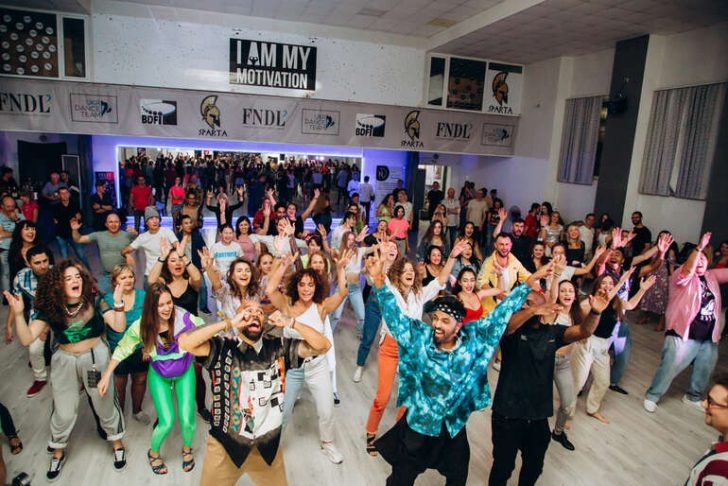
Every event where music is played has that moment, and weddings are not an exception. One second, Aunt Carol is nursing a chardonnay at table nine, arms crossed, quietly judging the centerpieces. Next, she’s a ’90s dancing queen. The flower girl is somehow being danced the two-step by the groom’s grandfather! The best man’s dancing prowess is being questioned as the guy who says “no dances” is suddenly leading a conga line. Nobody planned it. There was no memo. This is what the appropriate music can accomplish.
The right music or live band can make an impact, bringing generations together and making for the spontaneous moments that will be remembered long after the wedding is over. But, at good weddings, it does seem to happen with near uncanny regularity. One minute, the room is polite small talk and a rubber chicken. The next is a full-blown, sweat-through-your-shirt celebration where strangers are hugging like old friends. Meanwhile, at the party down the road, the DJ is playing technically fine music, and the floor stays empty except for one toddler who’s got the moves like Jagger. So what’s the difference? What’s happening in your brain (and your feet) when a dance floor goes from dead to unforgettable?
‘Cause It’s all About the Bass
Your body starts dancing before your brain signs off on it, which explains a lot about your cousin’s cha-cha at your sister’s rehearsal dinner. Research on EDM crowds found people moved roughly 12% more when very low-frequency bass was in the room. Yes, even when it was too low to hear. Neuroscientist Dr Cameron explains, when the bass drops, your body responds instinctively. This synced-up moving-as-one-organism thing has a name: entertainment. And it’s basically your neurons RSVPing “yes” to a party your conscious mind didn’t plan.
It’s Not Luck, It’s Vibes
Great DJ sets aren’t playlists. They’re stories. The best sets build emotional arcs. They deliberately structure progressions that build toward memorable peak moments. Starting familiar, then climbing. Play “the same song all night” energy-wise, and your dance floor goes flat, because without emotional variation, our brains perceive the experience as monotonous. Tempo matters too, but not the way you’d guess. Slow songs clear floors. So does going too hard too fast. About Music with a medium tempo generates the highest levels of excitement and engagement. The sweet spot for most modern dancing sits between 100 and 120 BPM.
Give the People What They Want
About Music selection matters at every event, even more on your big day, as you want it to be memorable. Your wedding will probably be the most important day of your life. Get the reception music wrong, and everything that happens during or after becomes unmemorable. Yes, practice your first waltz as a married couple. Laugh at those questionable moves. But a party ain’t a party until you make the dance circle bigger. Hiring wedding DJ services means hiring someone to run the vibe of your entire event.
No, we’re not talking about someone with a laptop and a playlist. Limiting your must-play list to about 15 songs helps. It gives a professional wedding DJ the ability to play your important songs and still change things up based on how your guests are reacting. Translation? Micromanaging the whole night’s setlist is the fastest way to kill a dance floor. DJ-BrianC says that as long as the DJ is open to custom playlists and must-play song requests, trust the professional. That’s what you’re paying for.
The ‘One Confident Dancer’ Effect
Ever notice how a party stays dead until one unhinged person commits to the floor, and then suddenly everyone’s in? That’s behavioral contagion. Dance psychologist Dr. Peter Lovatt says that the synchrony that occurs when people dance to a beat together is a powerful way to make a connection. It’s about music bringing people into the same rhythm and creating a shared experience that encourages others to join in.
“We know from scientific literature that dancing can contribute to an increase in self-esteem and self-worth, giving people confidence.” – Dr Peter Lovatt via The i Paper. Good DJs actively scout these “dance floor influencers” and cater to them early, because their energy is contagious. Literally, biochemically contagious, via a cocktail of dopamine, oxytocin, and dropped cortisol.
Your Brain Truly Loves This
Need a health justification for your questionable running-man revival? Dancing is linked to a reduced risk of dementia, more than walking, swimming, or cycling. Psychology Today reports that dance interventions. Singing and dancing can be effective in improving the quality of life and maintaining the mobility and balance of older people, it is claimed. This means that songs like the classic “Sweet Caroline” have one more purpose to serve on the playlist, in addition to the sing-alongs; at least everybody can enjoy great music when it brings people together, at least when it gets people moving.
FAQs
Your “must-play” list should capture the songs that matter most, but how many tracks are enough without limiting your DJ’s creativity? Here’s what to know.
How Many Songs Should I Give My DJ For a “Must-Play” List?
Keep it to around 15 tracks. This gives your DJ a feel for your musical taste while leaving room to adapt the playlist to your guests’ energy on the night.
Is There an Ideal BPM for Keeping a Dance Floor Moving?
Yes, and it’s not “as fast as possible.” Most contemporary dancing hits its stride between 100 and 120 BPM.
Is Dancing Good For You, or Just Fun?
Both, annoyingly. Research covered by Psychology Today points to real benefits for quality of life, balance, and mobility.
Dance Floor Psychology: By the Numbers
| Stat | What it Means | Source |
| 5 steps | Dr Peter Lovatt’s ‘Sound, Stand, Shake, Sync, Smile’ framework | All About Psychology |
| $1,000,000 | Liability insurance coverage: a proxy for how seriously professional DJs treat event risk | DJ-BrianC |
| 7 documented benefits | Seven distinct psychological/physical benefits of dance, from self-esteem to neural plasticity | Psychology Today |
| 3 feel-good chemicals | Dancing triggers serotonin, dopamine, and endorphins simultaneously | All About Psychology |
Just Dance
A great dance floor is never built by a playlist alone. It comes from the way music brings people into the same rhythm, creating shared energy that encourages even reluctant guests to join in. A skilled DJ reads the room, understands when to shift the tempo, and keeps that momentum alive. Your role is far simpler: step onto the dance floor, leave your hesitation behind, and let the music turn an ordinary evening into a memorable celebration.


Comments 0
No Readers' Pick yet.