






Solfeggio Frequencies: What the Science Says
 Story by:
Health and Wellness Blog
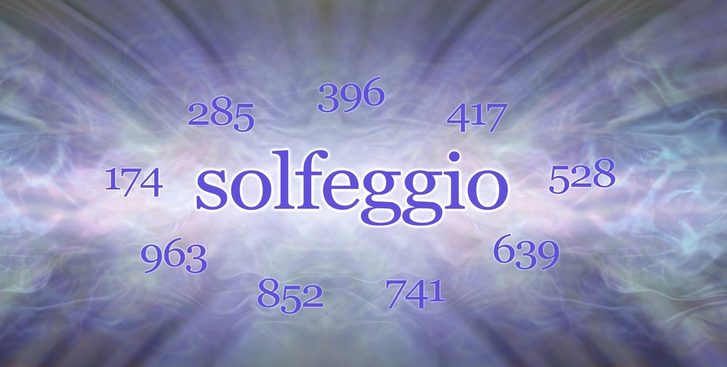
Solfeggio frequencies are tones sold online that are used to heal. The core six are 396, 417, 528, 639, 741 and 852 Hz, later extended with 174, 285 and 963 Hz. Each has a particular effect; 528 Hz is the most well-known,n and it is said to repair DNA. The scientific evidence is very clear: there is no known mechanism to explain such claims and no solid clinical evidence.
Health claims that are sometimes encountered in the music community, in artist interviews, and even in popular song lyrics are likewise subject to an evidence requirement. Captivating message and/or memorable performance can grab attention, but cannot take the place of credible scientific research.
Where the Numbers Come From
This name comes from solfège, which is known as do-re-mi. Guido of Arezzo used the syllables ut re mi fa sol la of a Latin hymn in the 11th century to train singers to learn melodies. The steps of a scale are the syllables that are named, NOT fixed pitches. No one during Guido’s lifetime actually knew how to measure frequency, and it wasn’t until the 20th century that frequency became a unit.
The frequencies are all contemporary. Joseph Puleo claimed that he could read them off the numbers in the Bible, and Leonard Horowitz popularized them in his book, Healing Codes for the Biological Apocalypse. Unlike known tuning systems, the series is not in tune with any of the previously mentioned systems, such as Guido’s hexachord, the church modes, just intonation, or Pythagorean tuning. In music analysis, a distinction is important, as only familiar patterns have to be analyzed with respect to the rules of musical theory.
The Studies in Practice: What the Studies Show:
The most famous experiment is one conducted in 2018 by the group of Akimoto and others. Nine adults were given 5 minutes of the same piano piece, one tuned at 528 Hz and one tuned at 440 Hz (the standard pitch). Salivary cortisol levels and self-reported tension levels decreased after the 528 Hz version, but not significantly after the 440 Hz version.
This is very weak evidence. This isn’t enough to claim healing; there were nine people (8 female, 1 male), one piece of music,c and one session. The difference tested is also small. “528 Hz music,” on the other hand, is regular music tweaked to be tuned around 528 Hz, which is approximately 1/6 of a “semitone” lower from the standard pitch of C. There’s no peer-reviewed human evidence that supports the s use of an audible tone for DNA repair, nor is there any known way an audible tone could reach and repair DNA within cells.
What is Real
Music has a beneficial effect on stress. In a meta-analysis of 104 randomized trials in 9,617 patients in 2020, music interventions reduced psychological stress (d = 0.55) and physiological stress (d = 0.38). The effects are not linked to specific frequencies, but to music. The factors that are likely to contribute are familiarity, tempo, personal taste, and a few moments of stillness.
Belief is also a factor: a specified path you think will soothe you is more likely to. If a Solfeggio track helps to relax you, then you are actually relaxed. The exact frequency used to claim the effects can’t be the answer, and a tone can’t replace appropriate medical care. While music is important for the frequencies it contains, the frequencies are not as significant as their musical era and auditory value, and should not be mistaken for a significant amount of medical benefits.





Comments 0
No Readers' Pick yet.